
Being mindful not assume what you don’t know. Even if someone does not have a child or if there is a large gap between children, it doesn’t always mean they are experiencing infertility.


You may not be able to fix this.
But you can make sure they don’t go through it alone.
If someone you love is facing infertility or a difficult family building journey, you may feel helpless, unsure what to say, or afraid of saying the wrong thing. Many people want to help but don’t know how. Yesh Tikva is here to help you understand what support really looks like, what to say (and what not to say), and how to show up in ways that truly help.
Infertility is not just a medical experience. It is emotional, relational, social, financial, and often spiritual. Many people facing infertility or a difficult journey to parenthood say the hardest part is not just the treatments and big decisions. It’s the silence, the isolation, and not knowing who they can talk to. Supportive friends, family members, and community members can make an enormous difference in how someone experiences this time in their life.

Let them lead the conversation. Some days they may want to talk about it. Some days they may not.

Take cues from them about how much they want to share and what kind of support they want.

Infertility is not a problem that can be solved with advice or positivity. Presence is more helpful than solutions.

Do not share their story with others unless they have given you permission.

Infertility is not one appointment or one month. It can be years of uncertainty, hope, loss, and difficult decisions. Even if there is a conclusion – happy or sad – these journeys can leave scars.

Even when you don’t know what to say. Even when it’s uncomfortable. Even when time passes.
“Just relax and it will happen.”
Infertility is a medical condition, not something caused by stress. This can make someone feel blamed for their infertility.
“I’m really sorry you’re going through this. I’m here to listen anytime.”
This acknowledges their pain without trying to fix it (or accidentally minimizing it) and lets them know they are not alone.
(After a loss) “At least you know you can get pregnant.”
This minimizes the grief of the loss and tries to replace grief with gratitude, which can feel very painful.
“I can only imagine how hard this must be. I’m here with you.”
This validates their loss and focuses on their experience, not a “silver lining.”
“Everything happens for a reason.”
This can feel dismissive of someone’s feelings, particularly grief, anger, or confusion.
“No one deserves to go through this, and I’m so sorry this is what you’re facing.”
This acknowledges that the situation is painful and not something they deserve without trying to explain it away.
“You can always adopt.”
Adoption is not a backup plan. This comment can dismiss the grief of not being able to have a biological child, as well as the experience of everyone in the adoption constellation.
“I’m here to support you on whatever path your family takes.”
This respects that there are many complicated decisions ahead and that their path is their own.
“My friend tried for years and then it just happened!”
These stories are usually meant to give hope, but often make people feel more isolated when their story is different.
“I know this has been such a long road.”
This acknowledges their specific journey instead of comparing it to someone else’s.
“Stay positive!”
This can make people feel like they are not allowed to be sad, angry, or scared.
“Some days must be really heavy. I’m here for all of it, the good and the hard.”
This validates having real feelings, not just positive ones – and opens the door to share them with others.
“What’s the update? Any baby news?”
This can make someone feel like the only value they bring to the conversation right now is whether or not they have pregnancy news.
“I care about you. You don’t have to share anything you don’t want to. But I’m also always here to listen.”
This gives them control over what they share and reminds them you care about them, not just updates.
(For those facing secondary infertility) “Be grateful. At least you already have a child.”
Gratitude and grief can exist at the same time. This comment dismisses very real pain and can also ignite feelings of guilt.
“Secondary infertility is real and painful. I’m really sorry.”
This validates an experience that is often minimized or misunderstood.
“Have you tried…?”
Most people facing infertility have already tried or considered more than you realize. This can feel like you think they haven’t done enough.
“I trust you to make the right decisions for your family. If you ever want help researching or you need a thought partner as you figure this out, I’m here.”
This shows respect for their decisions while still offering support.
“I didn’t know what to say, so I just didn’t bring it up.”
Silence often feels like abandonment to someone going through infertility.
“I don’t want you to think I’m ignoring what you’re going through. I care about you and I’m here.”
This acknowledges the situation and reassures them that they are not alone or forgotten.
If it starts with “At least…” — don’t say it.
If it starts with “I’m here…” — you’re probably on the right track.
Many people facing infertility say the hardest part is feeling forgotten or alone. You don’t need the perfect words — just reaching out matters.
You can reach out by:
You don’t have to have the right words.
You just have to show up.
Infertility can be physically and emotionally exhausting. Small practical help can make a big difference.
Consider offering:
Instead of saying “Let me know if you need anything,” try offering something specific:
“I’m free Tuesday night. Can I drop off dinner or take you for a walk?”
“I’m headed to the coffee shop. Can I grab you something and leave it on your stoop?”
One of the most complicated parts of infertility is being happy for others while also grieving for yourself.
If you are sharing pregnancy news with someone who is facing infertility:
A helpful way to say it:
“I wanted to tell you privately because I care about you and our relationship. I know this news may be complicated, and I understand if you need space. I love you and I’m here.”
Jewish holidays and family gatherings often center around children and family. This can be joyful and painful at the same time for someone facing infertility.
Ways to be thoughtful:
Inclusion does not mean pretending everything is fine.
It means making space for people as they are.
Infertility is often not a short experience. It can be months or years of treatments, waiting, loss, decisions, and uncertainty.
Ongoing support can look like:
The people who are remembered years later are not the ones who said the perfect thing. They are the ones who stayed and tried their best.
When your child is facing infertility, you may feel heartbroken, helpless, and unsure of what your role should be. You may want to fix this, make calls, offer solutions, or try to make the pain go away. But infertility is something you cannot fix for them — and what they often need most is not solutions, but support.
Your child may be experiencing grief, shame, anger, jealousy, hope, and fear — sometimes all at the same time. They may share everything with you, or very little. They may be trying to protect you from how much they are hurting.
What helps:
There is no perfect way to parent through this.
But there are ways to make sure your child does not feel alone.
When your child is facing infertility, you may feel helpless. You may want to fix this, make phone calls, research doctors, offer advice, or try to make the pain go away. But infertility is something you cannot fix for them, and that can be a very painful realization for a parent.

When your child is facing infertility, you may feel helpless. You may want to fix this, make phone calls, research doctors, offer advice, or try to make the pain go away. But infertility is something you cannot fix for them, and that can be a very painful realization for a parent.
Your child may be experiencing grief, anger, jealousy, shame, hope, and fear, sometimes all at the same time. They may share everything with you, or very little. They may be trying to protect you from how much they are hurting. They may pull away at times, not because they don’t love you, but because they don’t know how to carry their pain and yours at the same time.
Many parents also carry their own grief; grief for the grandchildren they imagined, grief for the pain their child is in, grief for the loss of the simple family story they expected. That grief is real, but your child is likely carrying an even heavier one.

Remind them that you care about them and that you are here for them no matter what happens.
Allow them to decide if, when, and how they want to talk about infertility.
Do not ask others for updates on your child and don’t share their story unless they have given permission.
Instead of guessing and acting, ask what would feel helpful to them right now. Offer suggestions if they’re unsure and listen.
Suggestions about doctors, treatments, or “things to try” can feel overwhelming unless they ask.
There are rarely simple answers in these situations. You don’t need to fix it. Acknowledging that this is hard and painful means so much more than offering unlikely solutions.
Continue to ask about and show interest in the rest of their life too.
When a friend is facing infertility, you may want to be there for them but feel unsure how. Life is busy, and the longer you wait to find the right words, the harder it can feel to reach out. You don’t need to know exactly what to say to let your friend know you care.
You’re excited to share your pregnancy, but you may be unsure how to tell a friend who is facing infertility. A little thought about when and how you share the news can give them space to take it in privately. Our guide to sharing a pregnancy announcement can help you find the words.
Here you’ll find a collection of ways to support those you care about as they face infertility and family building.




Yesh Tikva supports individuals and couples as they navigate the emotions, information, and outcomes that follow an infertility diagnosis or a complicated family building journey. We’ve created these suggestions knowing that friends and family often want to show love and support but may feel uncertain about what to say or do.
Every person’s experience is unique, so we encourage you to consider the individual and use what feels most appropriate in your relationship.
The following best practices are meant to guide compassionate communication with those facing infertility—whether you’re reaching out to a friend, welcoming guests into your home, talking with your child or grandchild, or holding space as a communal leader.
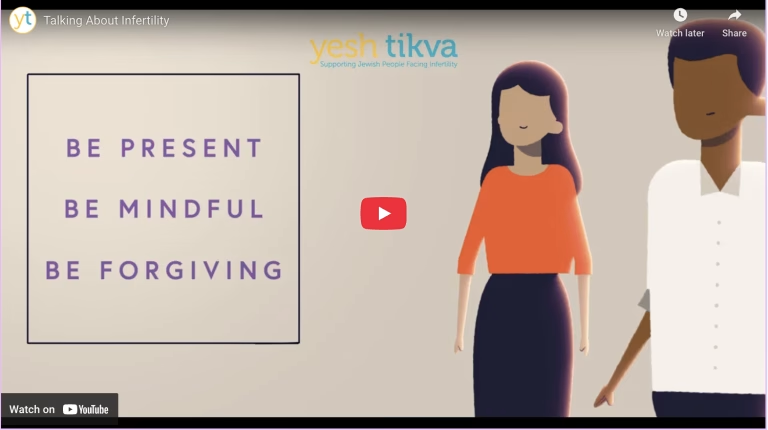
Supporting someone facing infertility isn’t always straightforward. What feels comforting to one person may feel painful to another, and it’s natural to worry about saying or doing the wrong thing. These guidelines offer simple “do’s” and “don’ts” to help you show up with empathy, sensitivity, and care—so your loved one feels seen, supported, and never alone.
Let your loved one know that, whatever the outcome of their journey, you are there for them. Use phrases like “I’m here for you in whatever way you need” rather than trying to offer solutions. Your presence, validation, and willingness to stand beside them—without judgment—sends the message that they don’t have to go through this alone.
Avoid saying things like “Don’t worry, it’ll all work out” or “I’m sure you’ll be pregnant soon.” While meant kindly, these statements can feel dismissive of real pain and uncertainty. They also place pressure on an outcome that may not be possible.
Infertility is often invisible. Even if a couple doesn’t have children yet, or there’s a large age gap between siblings, don’t jump to conclusions. They may have faced miscarriages, stillbirths, failed treatments, or may not be pursuing parenthood at all. Respect that family-building is personal, and assumptions can be deeply painful.
Questions like “So when are you having kids?” or “Why wait so long?” can reopen wounds. Even joking comments can land heavily. If they want to share, they will do so in their own time and on their own terms.
If your friend opens up, the most powerful thing you can do is listen. Allow them to guide the conversation, mirror their language, and resist the urge to fix what can’t be fixed. A caring presence, quiet empathy, or a shoulder to cry on can mean far more than advice.
If you’ve faced infertility, it’s okay to acknowledge that, but avoid shifting focus onto your own journey or projecting your emotions onto theirs. Each story is unique; this moment belongs to them.
Continue to check in with love, even if your friend doesn’t always reply. A simple “Thinking of you—no need to respond” can help them feel remembered without pressure. Consistency shows care, while flexibility respects their emotional bandwidth.
Bringing up infertility every time you speak to them, or making them feel responsible for your worry, can be exhausting. Let them set the rhythm and depth of conversation.
If you’ve walked this path, it may be comforting to let them know you understand some of what they’re going through. Keep your sharing brief, then turn the focus back to them. Let your story serve as a doorway to empathy, not as a blueprint.
Unless they ask for advice, avoid saying things like “When I did IVF…” or “You should try what worked for me.” Each person’s experience is different, and what felt right for you may not be appropriate for them.
Invite your loved one into activities where they can feel at ease—coffee, a walk, a movie night, or anything that isn’t centered on kids. In groups, be mindful of including them in conversation and steering clear of prolonged “parent talk.”
If every get-together revolves around children or pregnancy news, your friend may feel excluded. While you don’t have to avoid these topics completely, balance them with space for connection on other parts of life
When welcoming guests, consider what might help them feel more comfortable. Offer a quiet room to step away, and have alternative conversation starters ready (books, travel, current events, food, TV shows). A thoughtful environment makes it easier for them to relax.
Refrain from sharing advice on doctors, diets, or “ways to boost fertility” unless specifically asked. It can feel intrusive and minimizing, as if their struggles could be solved with a quick tip.
If children or pregnant guests will be present at an event, send a private note in advance: “We’ll have little ones around” or “A friend who is expecting will be joining us. I understand if that’s hard—do what feels right for you.” This allows them to prepare emotionally and make their own choice about attending.
If they decline, leave early, or need a break, respect their boundaries without pressing for details. Their well-being matters more than attendance, and honoring that builds trust.
If your friend or family member has shared their infertility journey, assure them that no matter what the outcome, you will be there for them in any way they need. Validate whatever feelings or reactions he or she may be experiencing, regardless of what you think about how they are handling the situation. Embrace them with love and without judgement.
Being mindful not assume what you don’t know. Even if someone does not have a child or if there is a large gap between children, it doesn’t always mean they are experiencing infertility.
If either member of the couple reaches out to share their story, the best thing that one can do for a friend or family member is be a friend, listen when they speak, offer a shoulder to cry on, a warm embrace or any other gesture of love and support you both are comfortable with.
The gift you offer is the gift of listening and being there.
Don’t offer “at least” comments (“At least you have a husband who loves you.” “At least you’re healthy in every other way.”)
If your friend or family member has shared their story, don’t bring it up every time you see them. Let them set the frequency, if at all.
If you have experienced infertility, don’t constantly speak of your own experiences or projecting your own feelings; listen instead.
Avoid sharing advice or tips on how to increase chances of conception, unless requested and let them guide the conversation.
Refrain from putting forward a recommendation of a specific doctor, medical procedure or other therapy. Allow the person or couple to perform their own research and find the best fit for them.
Let the person or couple share their story – don’t guess or ask or demand to know, even if you think you have the “right” (e.g., you wish to become a grandparent, aunt, etc.).
Watching your child or grandchild struggle with anything is difficult. When they are trying to have a child of their own, and give you a grandchild or great-grandchild, the pain can feel magnified.
We’re grateful you have found this resource to help you support yourself and your loved one.


Even if you had a similar experience, they will be navigating this in their own ways.

Asking when they will give you a grandchild is hurtful and a reminder of their struggle, even when meant in love or in jest.

For those navigating primary infertility (to have their first child) ensure that your children feel special in their own right and no less important to you even though they have not yet given you a grandchild.

Do not push your children to share information about their fertility challenges and treatments that they are not comfortable sharing. Follow their lead.

For some parents/grandparents, getting support may enable them to be more present emotionally for their child/grandchild.

For many couples, this issue of fertility is wrapped in shame and silence. You can help break that by speaking with your children when they are (rather than avoiding the topic) and sharing with other grandparents who may be entering this experience for the first time.
As a member of your child or grandchild’s support system, remember that you need support, too.
We know watching your child or grandchild be in pain is the most difficult thing for you to experience. Know that they greatly appreciate your searching for resources and information on how to best support them.
Have any of these questions crossed your mind?
“What should I say to my child? What about their partner? I want to say the right thing.”
“How can I make this easier for them? Should I research new treatments? Make suggestions? Cheer them up? I just want to make this better.”
“We were so close, and that bond has deteriorated. I’m starting to resent their infertility for changing my child and our relationship. What can I do?”
“The holidays feel different now…what do I do?”
Take a minute and download our Tikva Toolkit guides–filled with answers and suggestions to hold you through this journey of parenting a parent in waiting.
Welcoming loved ones into your home can be a beautiful act of connection. However, when guests are facing infertility, even ordinary gatherings can bring unexpected emotions. These tips are designed to help you host with extra thoughtfulness and create an environment where everyone has the chance to feel comfortable, supported, and included.
Be mindful of the group you are gathering. Be aware that someone present may be struggling–even if you don’t know it and even if they already have children. Avoid comments like “When it’s your turn?” “You’ll understand when you’re a parent,” or “You’ll understand when you have more kids.” These small remarks can unintentionally sting. Instead, focus on inclusive language that doesn’t assume everyone’s path will look the same.
Steer conversations toward topics that aren’t centered on kids or infertility.
Try openers or redirects like:
These give guests an easy way to connect without emotional landmines.
Infertility can make social settings feel unpredictable. Small gestures—like letting guests know they can step away if conversations feel heavy, offering a quiet room for a breather, or checking in privately about what would make them comfortable—create a sense of safety without putting them on the spot.
If your guest chooses not to engage in certain conversations or seems unsure about attending something upcoming, don’t push. Whether facing infertility or not, everyone has something going on under the surface. Let them share (or not share) at their own pace, and honor their cues with understanding.
If children or pregnant people will be present, it may be best to make sure your guest knows and acknowledge that it may be tender.
A quick, private note ahead of time can be kind:
“We’ll have little ones running around; I understand if that feels hard.”
“I wanted to make sure that you know that _______ is expecting. I understand if that feels complicated.”
This can go a long way in building trust. Additionally, if you’re aware that someone may be making a pregnancy announcement, it’s best to approach that with extra sensitivity.
It can be so appreciated when you make space for those facing infertility within child centered rituals, holidays and events. Be mindful though that not everyone wants to be recognized and that’s ok.
1. When offering an individual or couple the opportunity to participate in a ritual that is thought to help one have children, it is important to know who you are asking before doing so:
– Some people appreciate such offers and run at the opportunity.
– Some people feel very hurt by such an offer and would prefer it not be offered to them.
If you are unsure or do not know the person well, try to consult with a family member or close friend who would know so as to avoid unintentionally offending or hurting anyone.
2. It is a beautiful custom to use child centered holidays as an opportunity to pray for those who have not yet been blessed with children or who are struggling to expand their families.
3. A Brit Milah and Simchat Bat are wonderful opportunities to recite the Fertility Prayer, to keep in mind those facing fertility struggles during these celebrations.
4. If possible at your event or synagogue, consider moving stroller hubs away from the front entrance to the back, so that people can enter without crossing through an emotional minefield.
They are your child. Your sibling. A neighbor. Your friend. Your work colleague. The person you sit next to in synagogue.
They feel alone and isolated. They need a warm embrace, a friendly smile, a confidante, but they don’t feel comfortable approaching anyone. They’re worried people won’t understand or friends will be dismissive of their concerns. In a community where kids are central to traditions and continuity, many of those facing infertility suffer in silence.
But it’s not just them. You want to be present, to hold space for them. You’re ready to at least listen. But you’re not sure what to say or how to ease their stresses. You’re worried about saying the wrong thing.

The first thing to remember is that no two people suffer or react identically to similar situations. Stress, uncertainty and anxiety affect people in different ways.
At times, those struggling with infertility — be it primary, secondary or circumstantial — can become emotionally overwhelmed and may need some distance. It may come across as a personal offense but it is important to remember that it is not personal.
The following are suggestions. Be sure to consider each person as an individual and apply what you deem most appropriate. The below also links you to specific topics related to supporting others.
1. Be mindful to avoid making assumptions. Not everyone who does not have a child or has a large gap between children is navigating infertility.
2. If someone reaches out to share their story, the best thing one can do is listen.
3. Even when you feel like you don’t have the right words to share, showing up in silence just to be present and to listen goes a long way.
4. Assuring people that everything will be okay is generally not comforting. Rather, assure them that no matter what the outcome, you will be there for them in any way that she/he needs. Validate whatever feelings or reactions they might have, regardless of how you think they’re handling the situation. Provide them the space to experience those feelings without feeling judged.
1. Be mindful to avoid making assumptions. Not everyone who does not have a child or has a large gap between children is navigating infertility.
2. If someone reaches out to share their story, the best thing one can do is listen.
3. Even when you feel like you don’t have the right words to share, showing up in silence just to be present and to listen goes a long way.
4. Assuring people that everything will be okay is generally not comforting. Rather, assure them that no matter what the outcome, you will be there for them in any way that she/he needs. Validate whatever feelings or reactions they might have, regardless of how you think they’re handling the situation. Provide them the space to experience those feelings without feeling judged.
1. The best thing one can do is be a friend, listen when they speak and offer a shoulder to cry on.
2. Unless requested, avoid sharing advice or tips on how to increase chances of conception.
3. If a family member or friend does share their story with you, try not to bring it up every time you see them.
4. Assuring people that everything will be okay is generally not comforting. Rather, assure them that no matter what the outcome, you will be there for them in any way that she/he needs. Validate whatever feelings or reactions they might have, regardless of how you think they’re handling the situation. Provide them the space to experience those feelings without feeling judged.

The Support Line offers a confidential space for emotional support, information, and referrals related to infertility and family-building challenges. A trained professional will meet with you for short-term support and help connect you to Yesh Tikva programs and trusted external resources.
We look forward to connecting with you.
Please note: This is not a crisis line. If you need immediate help, call 911 or your local emergency number. If you’re experiencing a mental health crisis or need immediate support, call or text 988 (U.S. & Canada) or use their online chat.
Make sure to check your spam folder as well
Make sure to check your spam folder as well
Make sure to check your spam folder as well
This resource is free and offered with care, not spam.
We will never sell or share your information. You’ll receive the resource immediately after submitting.
Make sure to check your spam folder as well