

Description
Many providers are trained to support pregnancy, postpartum adjustment, and early parenthood. Far fewer receive guidance on how infertility, reproductive trauma, pregnancy loss, and diverse family-building experiences can continue shaping these experiences long after a child arrives.
For many individuals, becoming pregnant or welcoming a child does not erase the emotional impact of infertility, pregnancy loss, reproductive trauma, prolonged uncertainty, or complex pathways to parenthood. Parents may simultaneously carry joy, gratitude, fear, grief, hypervigilance, identity shifts, disclosure stress, legitimacy concerns, relationship strain, and ongoing emotional vulnerability.
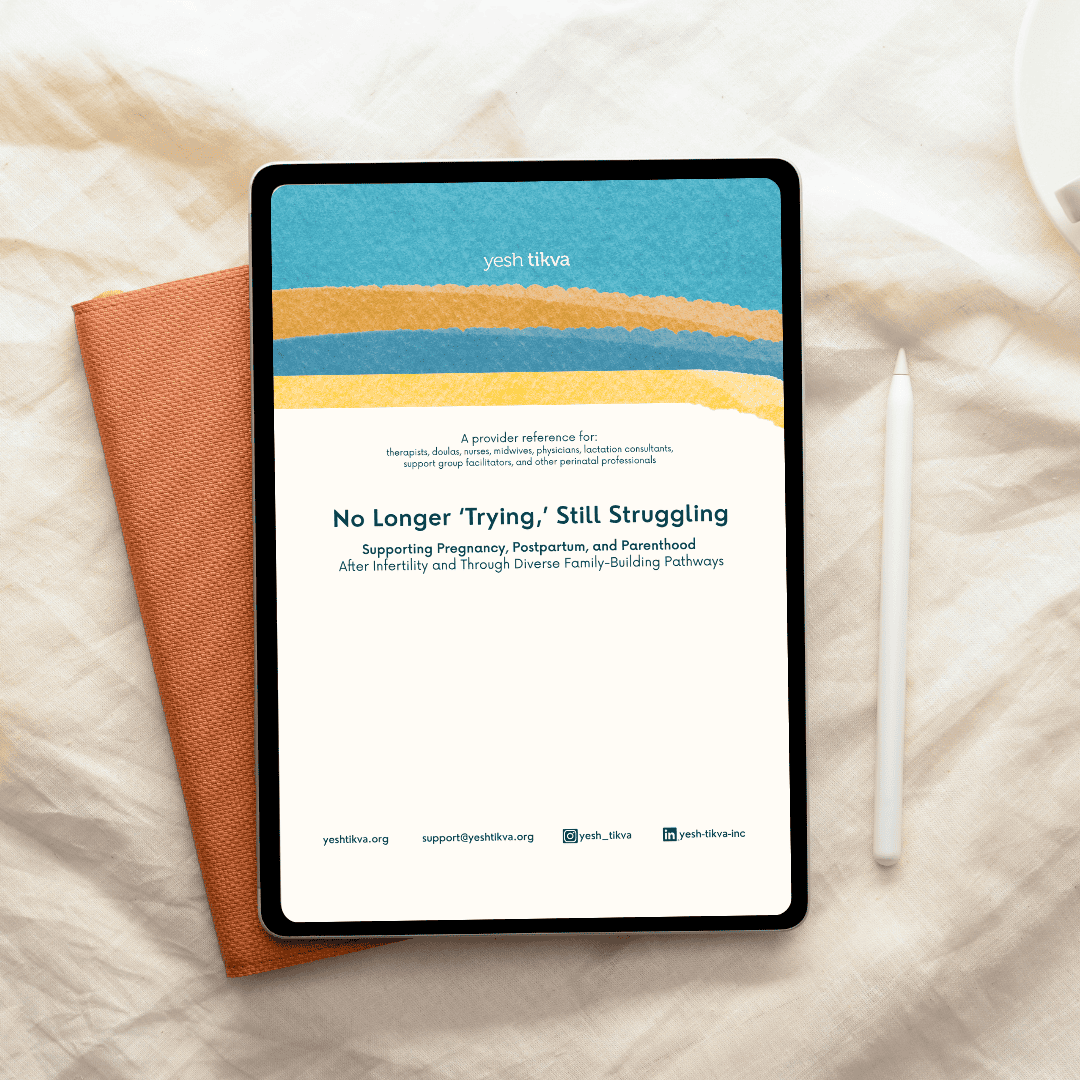
No Longer “Trying,” Still Struggling was created to help providers recognize, understand, and respond to these often-overlooked experiences with greater confidence, compassion, and clinical insight.
Developed by Yesh Tikva and written by infertility and family-building experts Kenzi Locks, LCSW, HWC, and Gila Block, this provider reference offers practical guidance for creating emotionally safer, more inclusive, and family-building-informed care.
Inside You’ll Find
✔ A clinical framework for understanding pregnancy, postpartum adjustment, and parenthood after infertility
✔ Exploration of common emotional themes, including hypervigilance, gratitude pressure, disenfranchised grief, identity shifts, disclosure stress, legitimacy concerns, and relationship strain
✔ Dedicated sections addressing donor conception, surrogacy, adoption, pregnancy after loss, LGBTQ+ family-building, solo parenthood by choice, and fertility treatment experiences
✔ Composite clinical vignettes illustrating real-world provider interactions and family experiences
✔ Trauma-informed language guidance and supportive response examples
✔ Practical tools for recognizing when additional mental health support may be beneficial
✔ Strategies for creating emotionally safe, inclusive care environments across healthcare, mental health, educational, community, and support settings
Ideal For
• Therapists
• Social Workers
• Psychologists
• Psychiatrists
• OB/GYNs
• Midwives
• Doulas
• Nurses
• Lactation Consultants
• Reproductive Endocrinology Teams
• Pediatric Providers
• Support Group Facilitators
• Clergy and Faith Leaders
• Parenting Educators
• Perinatal Professionals
Whether you support families during pregnancy, postpartum adjustment, feeding, infant care, mental health treatment, or community life, this resource offers practical tools to help parents feel seen, understood, and supported long after others assume the journey is over.
Because becoming a parent does not always mean the story of infertility, reproductive trauma, or family-building complexity has ended.
